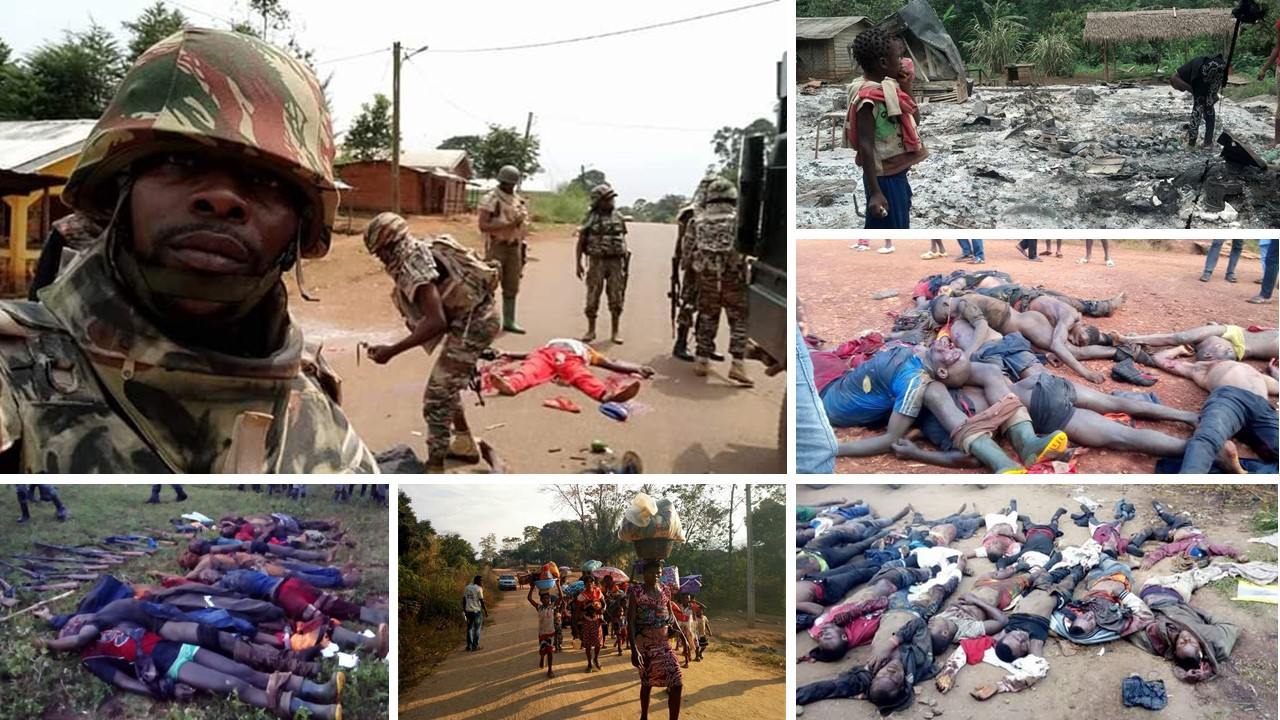
Cameroon Begins Failing Pope Leo XIV’s Moral Test 10 Days After: Jakiri’s Bloodshed and the Collapse of Restraint After a Global Call for Peace
Colbert Gwain | The Muteff Factor (formerly The Colbert Factor)
In Muteff, elders tell of a day the marketplace was mistaken for a battleground. Word had spread that a fugitive was hiding among traders. Armed men arrived without warning, surrounding the square where women sold beans and children chased one another between stalls. By the time the confusion cleared, the fugitive was gone—but the marketplace lay in mourning. “We found no criminal,” an elder would later say, “only the cost of searching for him the wrong way.”
That memory now echoes in Jakiri.
If confirmed, the incident raises grave concerns under International Humanitarian Law—particularly the principles of distinction and proportionality. These are not abstract ideals; they are binding rules designed precisely for moments like this. Even when pursuing legitimate targets, parties to a conflict must distinguish civilians from combatants and must not inflict harm that is excessive in relation to the anticipated military advantage.
Credible local reports indicate that villagers had gathered at the Fon’s Palace for a cultural festival—an event rooted in identity and continuity. Before the celebration could fully unfold, security forces reportedly stormed the venue, allegedly acting on intelligence that separatist fighters were present. In the aftermath, at least 15 people were said to have been killed, many labeled as suspected fighters .
It is here that a deeper moral tradition, long embedded in law and conscience, becomes impossible to ignore. As William Blackstone famously argued, “it is better that ten guilty persons escape than that one innocent suffer.” The principle is simple, but its implications are profound: the preservation of innocent life must outweigh the urgency of punishing the guilty.
Jakiri appears to invert that principle.
To strike a crowded cultural gathering on the suspicion that armed elements may be present is to accept, in advance, the likelihood that innocent lives will be lost in the process of targeting the guilty. It is to choose certainty of civilian harm over the risk of letting suspects evade capture—and in doing so, it crosses the very moral line that both law and conscience are meant to defend.
What gives this moment even sharper moral urgency is its timing.
Pope Leo XIV stood in Bamenda on April 16, 2026, issuing a direct appeal to conscience: restraint, accountability, and the protection of human dignity in the conduct of conflict. Ten days later—on April 26, 2026—the reported carnage in Jakiri unfolded.
Ten days.
Not months of fading memory or diluted resolve, but a matter of days—barely enough time for the echo of that message to leave the hills of the North West Region. The proximity is not incidental; it is indicting. It transforms what might have been seen as routine tragedy into a direct test of whether that moral call carried any operational weight.
Yet Jakiri suggests the opposite.
Early reactions from segments of the international and faith-based press—including outlets such as The Wall Street Journal, National Catholic Reporter, and Vatican News—increasingly frame the Anglophone crisis as a test of moral leadership, not merely a question of territorial control. Incidents like this risk reinforcing a perception that calls for peace are acknowledged in speech but disregarded in action.
There will, as always, be explanations.
Intelligence pointed to a threat. Armed actors embedded within civilian spaces. The urgency of neutralizing danger. But explanations are not exonerations. If anything, they heighten the obligation to act with precision and restraint.
Not whether force can be justified—but whether it can be limited. Not whether enemies can be pursued—but whether civilians can be protected. Not whether authority can be asserted—but whether it can be exercised with discipline.
Because this is the essence of the test now before Cameroon.
Jakiri suggests that, in this moment, that discipline faltered.
And the cost is not measured only in lives lost. When a Fon’s Palace—custodian of culture and community—becomes a site of violence, something deeper is broken. The invisible boundary that once separated civilian life from the machinery of war begins to disappear.
If there is to be any recovery from this moment, it must begin with truth: a transparent investigation, accountability where violations are found, and concrete safeguards to ensure that civilian spaces are never again treated as expendable.
Anything less will confirm what Jakiri already suggests: that the call for peace by Pope Leo was heard, but not heeded.
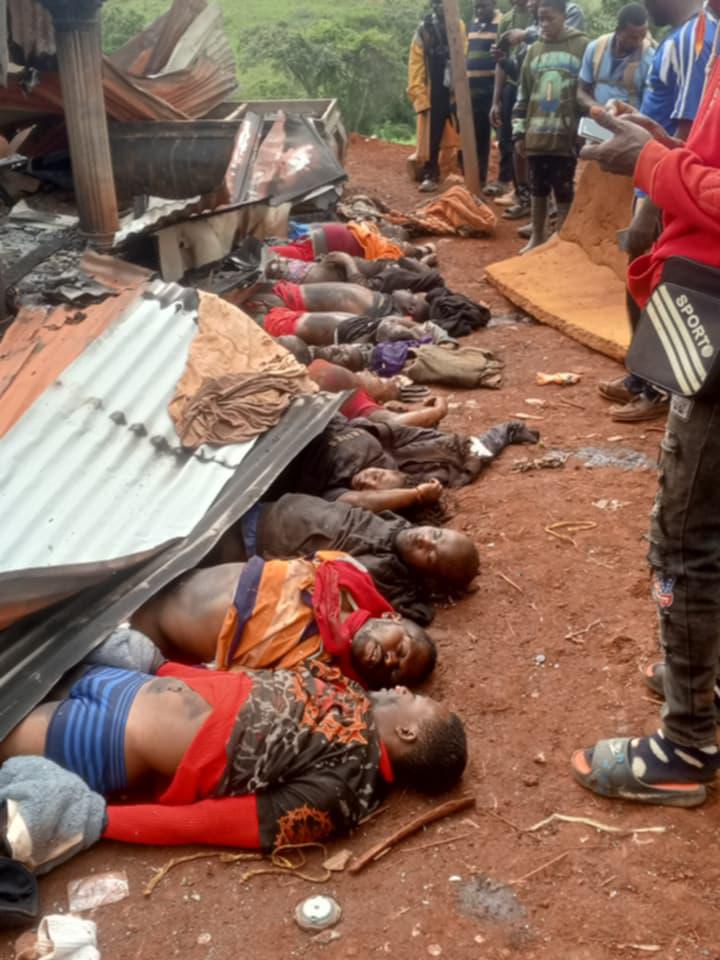

 British Southern Cameroons (Ambazonia) Genocide Library
Published by